Post

Yogi Khanna
Student
26 Feb 2026When the Machines Learned to Design: Are Graphic Designers Still Relevant in the Age of AI?
Artificial intelligence can now generate logos, posters, thumbnails, packaging ideas, and even full brand kits in seconds. You type a prompt, press enter, and instantly receive polished visuals. No software skills. No years of practice.
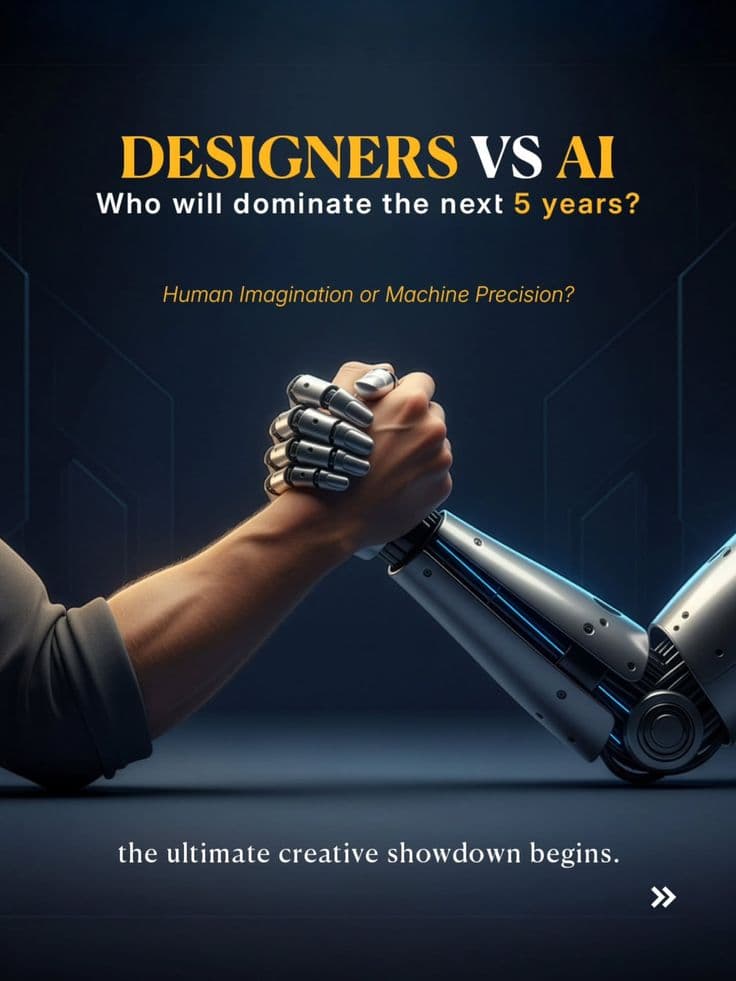
Because of this, a serious question has started circulating:If AI can design, are graphic designers becoming irrelevant?
At first glance, it seems logical. The biggest advantage designers once had, the ability to create visuals, is now accessible to everyone. Small businesses, students, and startups can produce decent graphics without hiring a professional.
But this assumption is based on a misunderstanding.AI did not replace design.It replaced execution.
For years, much of what people called “design work” was actually production work: resizing banners, removing backgrounds, editing templates, or making basic promotional posts. These tasks required technical skill, but not deep creative thinking. AI excels at repetition, so naturally it automated them.
Real graphic design was never about making things look pretty.
It is about communication.
- A bank must look trustworthy.
- A toy brand must look friendly.
- A luxury brand must look premium.
- A medical label must be readable and reassuring.
These outcomes are psychological. They influence how people feel and what decisions they make.
Artificial intelligence recognizes visual patterns. It can combine colors and fonts that usually work together. But it does not understand business goals, cultural meaning, or human emotion. It does not know why a hospital should avoid playful typography or why a premium brand needs visual restraint.
AI creates images that look correct.
Designers create visuals that mean something.
Today businesses don’t just need graphics, they need perception, recognition, and trust. When customers choose one product over another, the decision is often emotional and happens within seconds. Designers study user behavior, audience expectations, and brand positioning to shape that reaction.
In fact, AI is not eliminating designers. It is changing their role.
Instead of spending hours on repetitive editing, designers now focus on strategy: defining brand identity, maintaining consistency, and guiding communication across platforms. AI becomes a tool that speeds up production, while the designer provides direction.
The real threat to graphic designers is not artificial intelligence. It is staying limited to software skills. A designer who only knows tools competes with automation. A designer who understands psychology, branding, and storytelling becomes more valuable.
AI can generate many options.
A designer decides which one works.
Technology has removed technical barriers, but businesses still need human judgment. Brands still need personality. Customers still respond to emotion and trust.
Graphic designers are not disappearing.
They are evolving, from people who make visuals to people who shape perception.